
 English


 Ground Mounting System
 Roof Mounting System
 Carport Mounting System
 Farm Mounting System
 Easy Solar Kit
 Solar Tracking System
 Solar Inverter
 Solar Accessories

Real estate investment trust STAG Industrial recently launched three new rooftop solar projects in Pennsylvania, marking another significant step forward in the company's deployment of distributed solar power. Developed by Dimension Energy and assisted by Black Bear Energy, these projects further solidify STAG's leadership in implementing on-site and distributed solar solutions within its extensive national portfolio. STAG currently operates 49.5 megawatts of on-site solar capacity across 29 properties in 10 states. These Pennsylvania projects (totaling 9 megawatts) are matched by a trio of rooftop installations, a 2.7-megawatt New Jersey community solar portfolio, and three Maryland community solar projects totaling 11.6 megawatts. The company has also deployed systems in Massachusetts and throughout the Northeast. Brian Lamont, Senior Vice President of Development and Sustainability at STAG, stated, "STAG is committed to deploying distributed solar solutions to achieve both economic and environmental benefits." "Installing rooftop solar not only aligns with our broader sustainability strategy but also supports state and regional decarbonization goals, providing low-cost energy for local communities while advancing Pennsylvania's clean energy future."

When planning the new facility in Rosemont, Minnesota, Omni Brewing Company prioritized sustainability from the outset, integrating customized solar arrays into the architectural design. "At Omni Brewing, transitioning to solar power has been one of the most satisfying investments we've made," said Justin Walsh, owner of Omni Brewing. "From the very beginning, our goal has been to operate a cleaner and more sustainable business, and this installation has taken us a substantial step in that direction—now a portion of our brewery truly runs on solar energy, which we are incredibly proud of." To achieve these energy goals, Omni collaborated with All Energy Solar (AES) to install a 74.8-kilowatt system equipped with Enphase microinverters. AES ensured Omni could maximize return on investment by leveraging federal tax credits, additional depreciation, and USDA REAP grants. AES Business Development Director Michael Taller stated, "The complete system seamlessly integrates with the pub's pitched roof design and nearly matches the roof color, presenting a clean visual effect. It has a significant environmental impact, covering most of the on-site usage requirements."

PVFARM has now entered the energy storage design field, introducing its commercial platform version, RE STACK, for exploring utility-scale battery energy storage system (BESS) layouts. Combined with the original PVFARM platform, RE STACK forms an expanding suite of utility-scale renewable energy design tools, enabling teams to explore a wide range of layout options before proceeding to detailed engineering. RE STACK enables engineers to configure utility-scale battery storage projects based on manufacturer specifications, allowing rapid exploration of site layouts, road concepts, and medium-voltage aggregation topologies before detailed engineering begins. PVFARM is also testing a new tool called RE PILOT, which can quickly identify the optimal solar site layout to enhance energy output, capital expenditures, levelized cost of electricity, and storage efficiency while addressing POI and grid constraints across thousands of site configurations. During the testing phases of RE STACK and RE PILOT, collaboration with over 80 companies directly shaped the capabilities of these platforms. Throughout the testing process, participants provided feedback on key design considerations, covering equipment selection, power conversion system (PCS) architecture, enhanced planning, fire safety pathways, and site topology. Beyond ensuring these platforms could address real-world project challenges, this extensive collaboration also delivered insights essential for shaping RE STACK and RE PILOT, enabling them to deliver intuitive, fact-based decision support while reflecting the latest technological and market trends. "The future of engineering is not just about designing faster. More importantly, it's about exploring more possibilities before the design phase," said Maxim Markovic, Chief Technology Officer of PVFARM. "With RE STACK and RE PILOT, we empower engineering teams to evaluate more possibilities before committing to detailed design. The result is more informed decision-making, enhanced confidence, and workflows that match the growing complexity of large-scale renewable energy projects."

The unique solar system at Drake Plastics has been operating for eight months in Cypress, Texas, helping the polymer manufacturer achieve a 30% overall energy usage offset. Trinasolar provided a 1.3-megawatt set of rooftop and parking shade solar panels, with the shade system designed to spell out "Drake.". Spear Commercial & Industrial led the installation efforts. The distinctive carport design transformed the installation process into a renewable energy asset and became a brand declaration, visible as numerous flights en route to George Bush Intercontinental Airport (IAH) in Houston passed over the Drake complex. Mark Rangel, Executive Vice President of Spear, stated: "Trina's Vertex N module enables the system to maximize solar power generation in scenarios with limited roof and carport design space." "We are delighted that it delivers an attractive return on investment for Drake with a short payback period while meeting their energy goals in a cost-effective manner. We are also pleased to collaborate with Drake to showcase a striking brand statement through these modules, adding a creative touch to the project.". ” The new photovoltaic system typically generates 120% of Drake's afternoon electricity consumption during the day, aligning with their peak load and grid demand. Drake has achieved its goal of offsetting 30% of overall energy usage. The system is projected to yield nearly a 20% internal rate of return (IRR), with a payback period of less than four years. "The new solar power installation has achieved several important goals," said Steve Quans, President of Drake Plastics. "It fully aligns with our mission statement to be a responsible environmental steward and contribute to the community. Our solar power plant supplies electricity to the grid when it's most needed—doing good never goes out of style. It also aligns with our 'lean' philosophy of eliminating waste and inefficiency; direct power offset delivers cost benefits and helps Drake compete and grow."

If all planned solar inverter manufacturing expansion projects are completed, domestic companies will be able to meet the demand under the FCC's ban on new foreign inverter products. It is expected that over 100 gigawatts of new solar inverter manufacturing projects will commence production before 2028. The FCC's intent here is clear. The U.S. government believes that reliance on foreign inverters poses a national security risk, citing both cybersecurity and economic concerns. Joe Shangro, a research analyst at Wood Mackenzie, stated, "However, the current definition of 'power inverters' in the ban focuses on wireless communication, leaving the scope of its applicability in question—particularly for utility-scale central inverters operating via wired connections." "Future guidance from the FCC will be crucial to understanding the full scope of the ban. Leading manufacturers are informing customers that their products do not fall under the ban's purview, while project owners worry that their existing inverters may be blocked from receiving critical firmware updates.". ” Wood Mackenzie found that over 90% of the 200 gigawatts of photovoltaic inverters deployed in commercial and large-scale solar projects in the U.S. came from China and other East Asian regions. Chinese-made inverters accounted for 50% of the U.S. inverter market share in 2024 and 2025. In the short term, the company anticipates that domestic inverters will cost more than imported products due to labor and manufacturing expenses. However, with the exit of 45X and intensified inverter competition, these costs may stabilize. "The domestic price premium for inverters is a factor that project owners must consider. However, it not only provides supply chain certainty to avoid the impact of this FCC ban but also addresses any future policies that may further restrict imports," Shangraw stated. "If this proves to be a significant market shift, the U.S. is now better positioned than ever to meet new domestic demand. We forecast that by the end of 2027, the domestic PV/PCS inverter manufacturing market will be capable of supplying over 100 gigawatts of AC capacity."

Solar panel manufacturer Heliene permanently laid off 93 employees at its solar panel assembly plant in Mountain Allen, Minnesota, effective August 5, 2026. The positions primarily involved solar panel assembly, though the notice also included some human resources roles. Heliene confirmed to Solar Power World that 182 positions remain active in Mountain Allen. Heliene operates a manufacturing base with an annual production capacity of 800 megawatts, distributed across two buildings. The company's original plant began operations in 2018, while the second facility opened in 2022. The layoffs "were due to unforeseen business conditions," and employees' salaries will continue to be paid until October 4, 2026. Heliene's Vice President of Human Resources, Brian Pringle, stated, "The measures planned are expected to be permanent, but the entire plant will not close; it will remain operational with a streamlined workforce that better aligns with current customer and business needs." Canadian company Heliene first produced solar panels for the U.S. market through OEM Silicon Energy in the mid-2010s. After Silicon Energy exited the market, Heliene took over the factory in Mountain Iron and transformed it into its own brand. The company is highly focused on collaborating with North American suppliers and uses domestic components as much as possible in panel production. Heliene's sales personnel described the company as a "manufacturer, not a warehouse" in Solar Power World. The company produces panels on order rather than storing unsold megawatt products in warehouses. Last year, Heliene established its second manufacturing facility in Rogers, Minnesota—a 500-megawatt solar panel assembly plant—due to "the sustained demand for our high-quality, high-domestic-content solar photovoltaic modules," and has hired over 220 new employees there. Solar Power World confirmed with Heliene that the Rogers facility is unaffected by the layoff notice.

Ørsted has achieved commercial operation at the 500-MWh Old 300 energy storage project in Needville, Texas. "During periods of tight supply and demand, battery storage has provided urgently needed power to ERCOT and played a crucial role," said Melissa Peterson, President of Ørsted Americas Onshore. "The commercial operation of our Old 300 energy storage project will deliver tangible benefits, such as enhancing grid reliability by providing additional resources to Texas grid operators and offering more diversified and localized energy options as electricity demand continues to grow.". ” The 250-megawatt battery storage project and the 430-megawatt solar project, "Old 300 Solar," are co-located at the same site. "Old 300 Storage" operates independently of "Old 300 Solar" and will enhance grid stability by supplying power during peak demand periods. Since 2024, "Old 300 Solar" has been powering approximately 80,000 Texas households and businesses. Together, these solar and storage projects will generate around $110 million in property tax revenue, supporting local infrastructure, schools, and emergency services. Ørsted procured the battery energy storage system for this project from Tesla. These Megapacks were manufactured in Los Angeles, California. Ørsted and Tesla proactively collaborated with the Niederviller Fire Department to provide comprehensive training on the latest product technologies and safety emergency protocols.

We Energies, a power utility company in Wisconsin and Michigan, announced the launch of three energy projects in Wisconsin to support peak hour grid demand. The new project is: Darien Battery Energy Storage: A 75 megawatt energy storage facility located in Woolworths County. Construction started in July. This facility is part of the Darien Solar and Battery Park, a 250 MW solar project that will be put into operation in 2025. Dawn Harvest Solar and Battery Park: A 150 million kilowatt solar project located in Rock County, equipped with 50 megawatts of battery energy storage. Construction started in June. Badger Hole Wind Energy Center: a 110 million kilowatt wind power project located in Iowa and Grant County. Construction started in July. These three projects have previously received approval from the Wisconsin Public Service Commission. These renewable energy projects are part of our strategy to enhance reliability through a balanced energy structure that includes Wisconsin's indigenous energy sources such as renewable energy and state-of-the-art natural gas power plants, "said Mike Hooper, President of We Energies. In addition to helping meet the growing demand for electricity, these three projects will also provide high paying jobs with priority protection for union rights for hundreds of workers Overall, We Energies has over 3000 megawatts of solar and wind energy, as well as 600 megawatts of battery storage projects that are currently in operation, under construction, or have been submitted for regulatory approval. Weineng will become the majority owner of the new project, with Wisconsin Public Utilities Company (WPS) and Madison Gas and Electric Company (MGE) as co owners. These projects were developed by Invenergy and are currently under construction. Putting these projects into construction is an important milestone for Wisconsin's energy future, especially as electricity demand continues to grow and all energy sources are needed to meet this demand, "said Daniel Lichfield, Senior Vice President of Invenergy Development. We are proud to help We Energies, WPS, and MGE deliver these solar, wind, and battery storage projects and continue our investment record in Wisconsin. These projects not only provide much-needed energy, but also invest directly in local communities by creating new, high paying jobs and stable income

Public Storage plans to develop 60 rooftop community solar projects with Solar Landscape in northern Illinois over the next two years. These projects within ComEd's jurisdiction will deliver 44 megawatts of electricity to the grid. As electricity demand grows faster than supply, community solar projects like this provide a clean energy solution that helps fill the supply gap and save customers on electricity bills, "said Jill Quinones, President and CEO of ComEd. By the end of the year, it is expected that there will be approximately 400 community solar projects within ComEd's Northern Illinois jurisdiction, making the region a national leader in developing renewable energy that plays a critical role in providing clean, affordable electricity in the long term. ” The expansion of new community solar projects has received support from Illinois' clean energy policies, including the Climate and Fair Employment Act (CEJA) and the Clean and Renewable Grid Affordability Act (CRGA). Solar Landscape is also a long-term partner of Public Storage. Sean Keegan, CEO of Solar Landscape, said, "Commercial rooftops represent one of the fastest and most scalable opportunities to expand the power grid using existing infrastructure." "By partnering with ComEd and Public Storage, underutilized real estate can be transformed into energy infrastructure, reducing electricity bills for Illinois households while helping to meet the growing electricity demand in the region. This investment portfolio demonstrates how utility companies, homeowners, and private capital can work together to deploy clean energy on a meaningful scale. ” The project will also create local employment opportunities and expand career development space. It is expected that the construction industry will support approximately 300 jobs, and partners including STEP-UP Solar, Chicago City Alliance, Hispanic American Building Industry Association (HACIA), Youth Construction Lake County Branch, and other Illinois youth construction projects are preparing Illinois residents to enter the growing clean energy industry. Since 2024, STEP-UP Solar and its partners have provided vocational training in the solar industry to 139 individuals. The International Brotherhood of Electrical Workers will also play a key role in cultivating the skilled local workforce needed to deliver these projects and support Illinois' growing clean energy economy. Facilities play an indispensable role in serving communities, committed to continuing the lasting benefits created through consumer affordability and green energy, "said Nathan Vitan, Chief Legal Officer and Executive Founder of Sustainable Development at Public Storage. Public Storage has the largest solar project in the industry and is expected to expand to 1300 properties by the end of 2026.
Categories
New Products
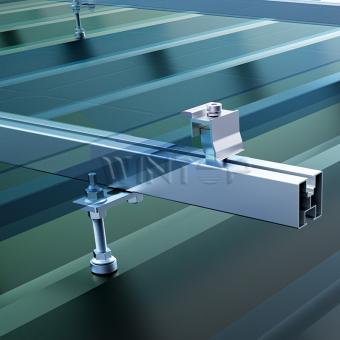
Tin Roof Rapid Solar Mounting System with Hanger Bolt Read More
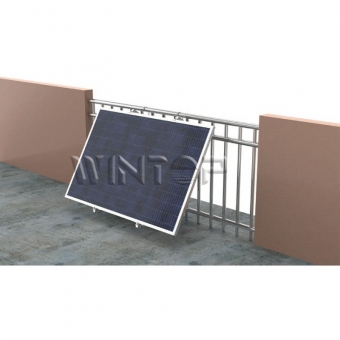
Residential Small Solar Easy Bracket Kit for Home Balcony Read More
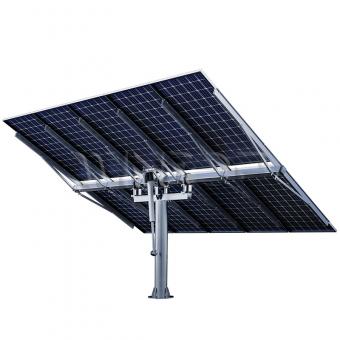
Automatic Single Pile Solar Tracker with 10 PV Panels Read More
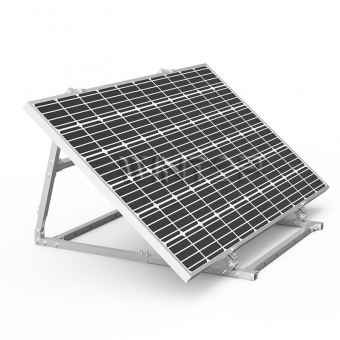
Angle Adjustable Aluminum Easy Solar Panel Bracket for Garden Read More
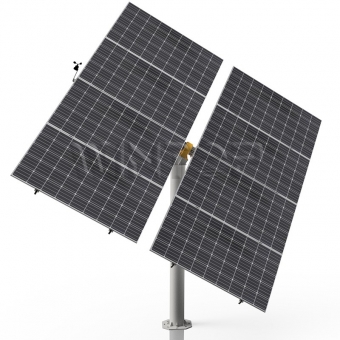
Intelligent Single Post Dual Row Solar Tracking System Read More
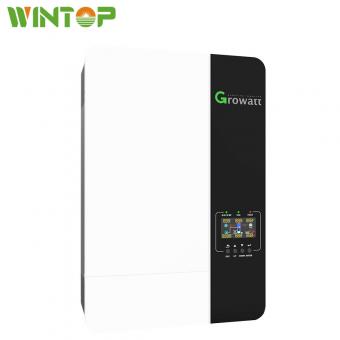
5000ES Solar Off-Grid Energy Storage Inverter Supplier Read More

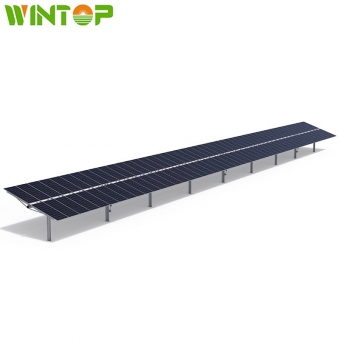
Multi Drive Double-Sided Single Axis Tracker System Read More
For inquiries about our products or pricelist, please leave to us and we will be in touch within 24 hours.
 RM502, Sihai Smart Zone, No.189, Fanghu West Road, Huli District, Xiamen, Fujian, China.


© Copyright: 2026 Xiamen Wintop New Energy Tech Co., Ltd.. All Rights Reserved.

IPv6 network supported


